One Workforce, Many Sectors: Takeaways from OPITO Global 2026
How can safety-critical industries build a more connected workforce while maintaining the highest standards of safety and competence?
This question was at the heart of OPITO Global 2026, which brought together operators, regulators, training providers and the next generation of talent in Kuala Lumpur under the theme ‘A Shared Future of Safety: One Workforce. Many Sectors.’
Across two days, discussions explored how industries can build on existing skills and experience, develop greater confidence in the recognition of transferable competence and prepare workers for the changing demands of the energy system.
From the launch of our One Safety Vision research to the official opening of our Asia Pacific Centre of Excellence, the conference provided an opportunity to reflect on the progress already being made and the collaboration needed to take this work forward.
Building confidence in workforce mobility
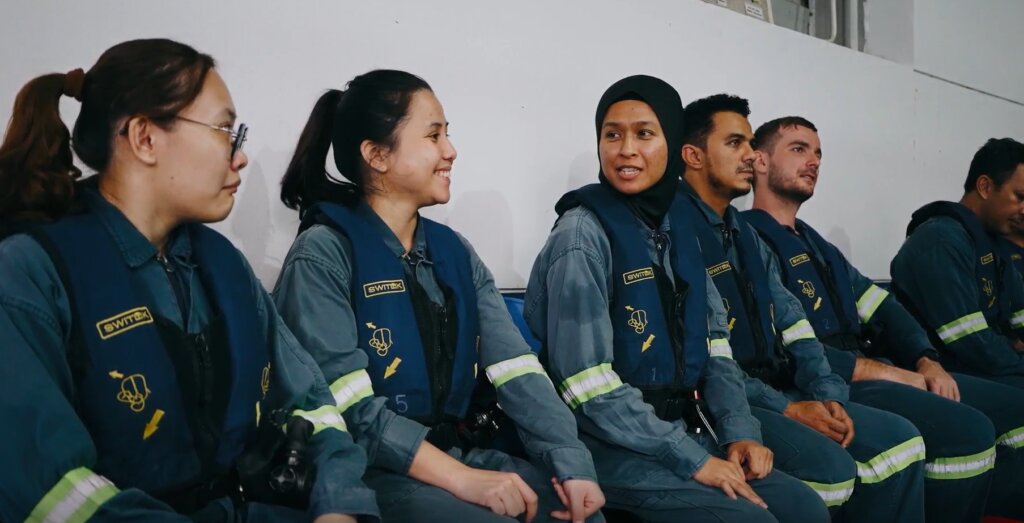
We launched our inaugural report, One Safety Vision: The Great Knowledge Exchange, at this year’s OPITO Global conference. Our proprietary research was commissioned to better understand attitudes towards workforce mobility, skills recognition and transferable competence across safety-critical industries in Asia Pacific, and to identify opportunities to reduce barriers while maintaining safety standards.
The research found that across Australia, Indonesia, Malaysia, the Philippines, Thailand and Vietnam, 76% of employers are confident their workers have the right skills and behaviours to work safely in hazardous environments.
Over half of employers would consider using workers from adjacent safety-critical sectors if it became harder to find skills, and the same share of workers would consider making that move.
However, recognising competence across sectors remains a challenge...
More than two-thirds of employers always or often require additional training, certification or assessment before accepting workers from adjacent safety-critical sectors, and 57% of respondents say trust breaks down when working across sectors, projects, employers or geographies because training or certification is not recognised.
As our CEO, Stephen Marcos Jones, put it: "Workers need to know that their experience will be recognised when they work across countries or industries." Employers need confidence that safety standards will be consistent across more diverse workforces. Lijun Yang, Business and Training Director of China National Offshore Oil Corporation (CNOOC) spoke to exactly that tension on Day One, emphasising how international operators have to balance globally accepted standards with local requirements.
Strengthening our commitment to Asia Pacific
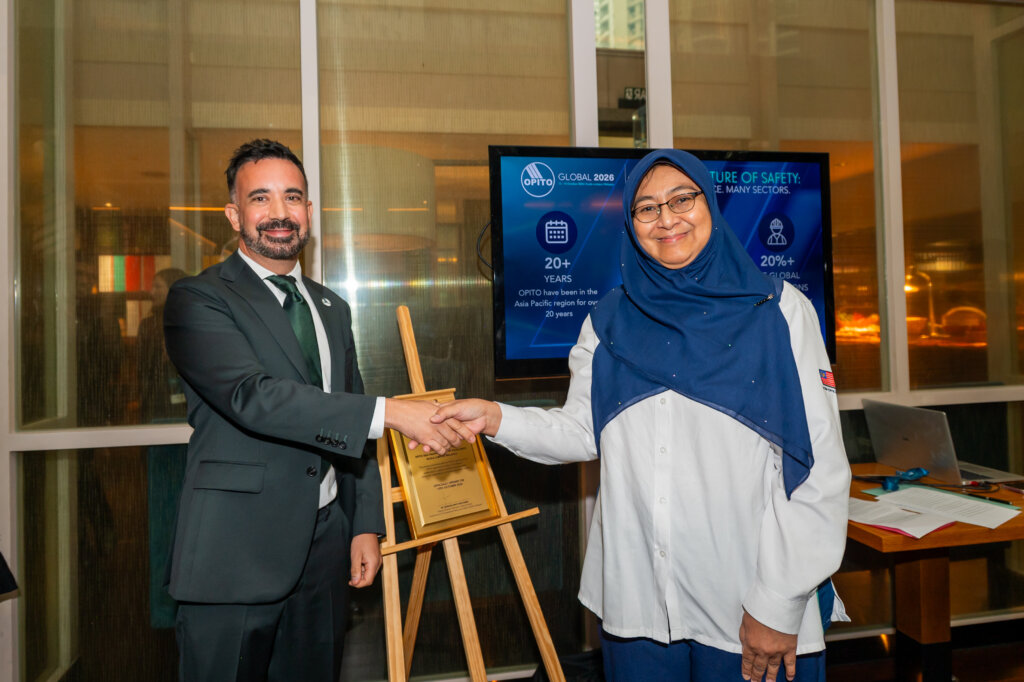
OPITO Global 2026 also marked an important milestone in our regional journey, with the official launch of the OPITO Asia Pacific Centre of Excellence in Kuala Lumpur.
Building on almost 20 years of OPITO's presence in Malaysia, the Centre represents the next stage of our commitment to the burgeoning region, reflecting our ambition to deepen our contribution through stronger partnerships, greater capability and an enhanced regional presence.
With 56 training centres across 13 countries in Asia Pacific, the region already accounts for around 20% of OPITO's global training registrations. The Centre of Excellence will serve as OPITO’s regional hub and help bring together expertise, insight and best practice from across the region, fostering greater collaboration and creating new opportunities to advance workforce safety and competence.
We were pleased to mark the official launch alongside Dr Ramuna Mohamed, Deputy Director of the Petroleum Safety Division at Malaysia's Department of Occupational Safety and Health (DOSH), and our industry partners.
Recognise what is equivalent and bridge only what is different
Discussions reinforced the importance of recognising where competence is genuinely shared, while accounting for the different requirements of individual industries and working environments.
Working at height in a mine and working at height on an offshore platform share common competencies, but each environment also brings risks and requirements of its own. The opportunity lies in separating what is already equivalent from what is genuinely different, while identifying where additional training or assessment is required and maintaining local safety and regulatory requirements.
Safety-critical industries already share a significant amount of knowledge and experience , however we must recognise that different sectors and operating environments will continue to require specific competencies. The panel session on decarbonising the workforce demonstrated a good example for this in the case of hydrogen and carbon capture, which will require new capabilities while drawing on skills and experience that already exist in established energy industries.
Mining is also an important part of this picture for the region. According to the US Geological Survey, Asia Pacific holds more than half of the world's rare earth reserves and over 40% of its nickel. Mining was one of the five sectors in our research, and as OPITO broadens its work across safety-critical industries, the skills that miners and energy workers share give us a strong foundation to start from.
This thinking was brought to life at the OPITO Products Bar, where delegates explored cross-sector career pathways through our interactive sector map and discussed how common competencies can support workforce mobility across safety-critical industries.
Visitors also experienced a mining driving simulator, demonstrating how technology can support skills development and workforce readiness, while conversations with employers, training providers and learners reinforced the opportunity to recognise what is equivalent, bridge what is different and maintain the integrity of industry-specific requirements.
A standard only matters if it shows up on site
If one message stood out from the practitioners on stage, it was that a standard only creates value when it contributes to safe performance in the workplace. Discussions also explored how leadership, workplace culture and human performance influence what competence looks like in practice. Ensuring workers have the skills, knowledge and confidence to work safely also requires an environment where people feel able to speak up, challenge procedures and raise concerns.
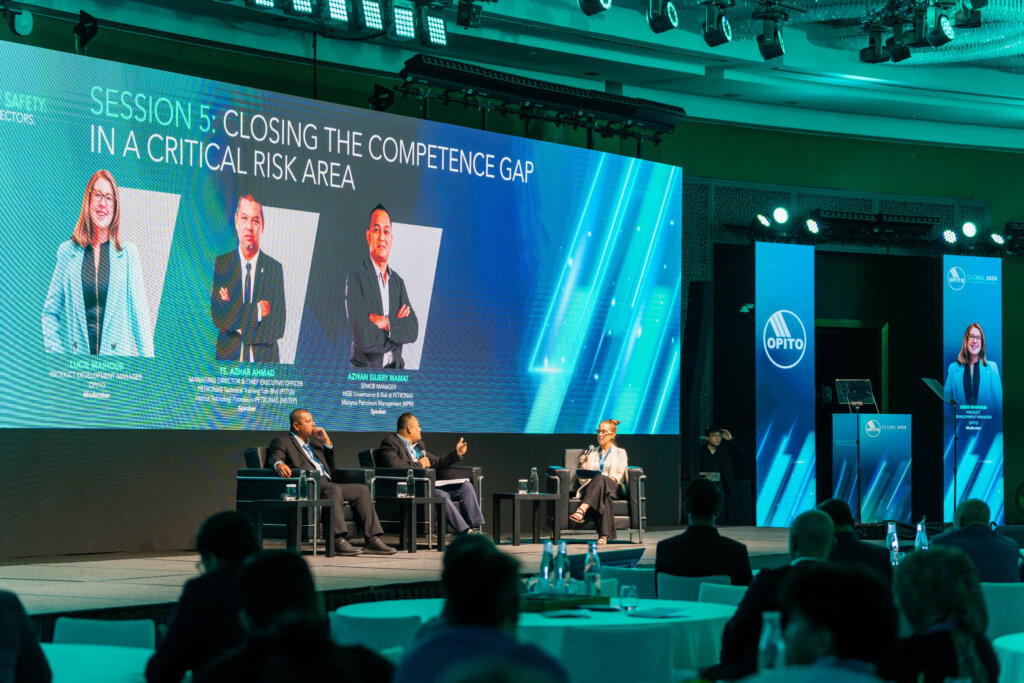
One panel reinforced that, alongside the importance of upholding safety standards, complacency can easily creep in. The session on Closing the Competence Gap provided a practical example of what effective competence assurance looks like, from training and assessment through to verification in the workplace. Competence here has to be demonstrated and assured, which means following it beyond the classroom and into verification in the workplace. Our research suggests employers feel the same way: 54% of employers and operators open to hiring or deploying workers from adjacent sectors said practical competence assessments would give them confidence to do so.
The next generation needs pathways it can see
Our keynote speaker, Jo Farrell opened Day Two with the story of her own route into construction 30 years ago and a reminder of why inclusion matters in creating a diversity of experience across sectors. It is the same thinking behind our APTUS apprenticeship programme, which opens careers in energy to people from all walks of life.
Whether through apprenticeships, early-career programmes or cross-sector transitions later in life, a recurring theme throughout the conference was the importance of creating accessible pathways into and across safety-critical industries. As a global not-for-profit organisation, OPITO is committed to reinvesting in STEM education and early-career initiatives, helping young people discover the opportunities that a career in energy can offer.
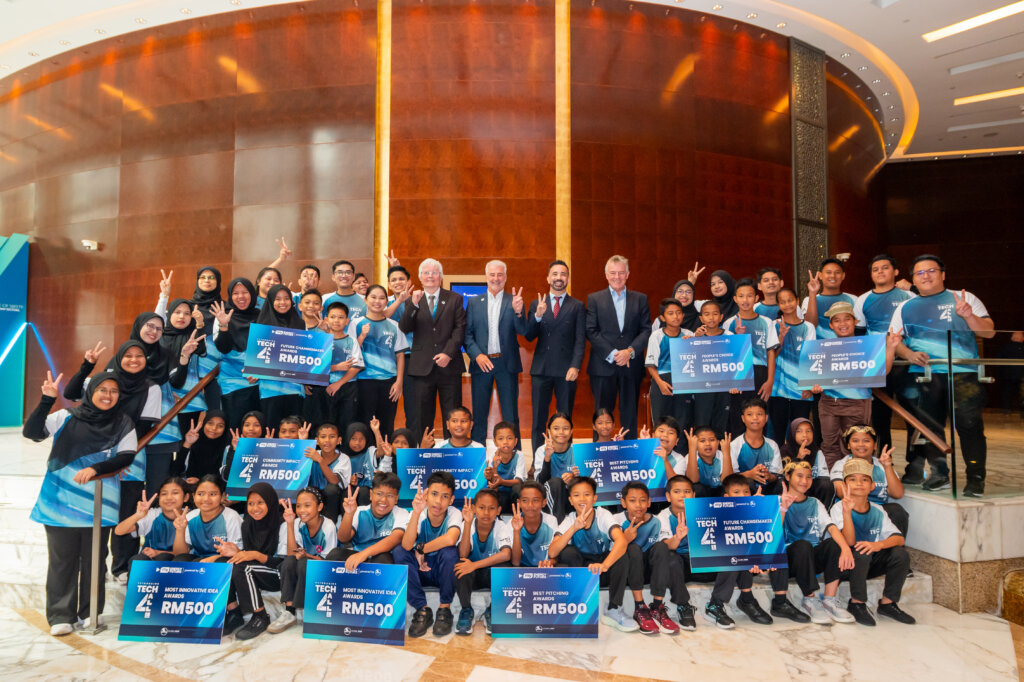
Initiatives such as My Energy Future help strengthen connections between industry and education, giving young people greater visibility of the skills, career pathways and opportunities available across the evolving energy sector. Students from across Malaysia took part in the My Energy Future Live showcase , supported by Petrosains, giving us a glimpse of the future workforce through an innovation showcase at the forum. As Title Sponsor of the Petrosains Tech4All programme, OPITO was proud to see 10 finalist teams use robotics and artificial intelligence to develop practical solutions for challenges facing their schools and communities. These students will enter industries that are more digital and more interconnected than the ones most of us joined.
Our responsibility is to ensure the next generation has clear pathways into these industries, with safety remaining the foundation of every opportunity.
Where do we go from here?
Stephen closed the conference by setting out the work ahead with a focus on partnership.
First, the industry needs to map where competence is genuinely shared and recognise what is already equivalent. It then needs to bridge the gaps that remain and continue bringing together the people who can test and maintain those pathways over time.
Our training provider workshop showed how much of that can be delivered through networks that already exist. More than half a million OPITO registrations take place every year across almost 300 accredited centres in 50 countries, and those centres will continue to play an important role as we expand into new sectors.
The launch of our Asia Pacific Centre of Excellence provides a further opportunity to strengthen these partnerships and support the development of a safe, skilled and competent workforce across the region.
No single organisation can do this alone, and the discussions at OPITO Global demonstrated a clear appetite for continued collaboration across safety-critical industries. Progress will require strong partnerships, a willingness to share knowledge and experience, and a collective commitment to maintaining and raising standards of safety and competence.
If you'd like to keep the conversation going, download One Safety Vision or get in touch with our team.
